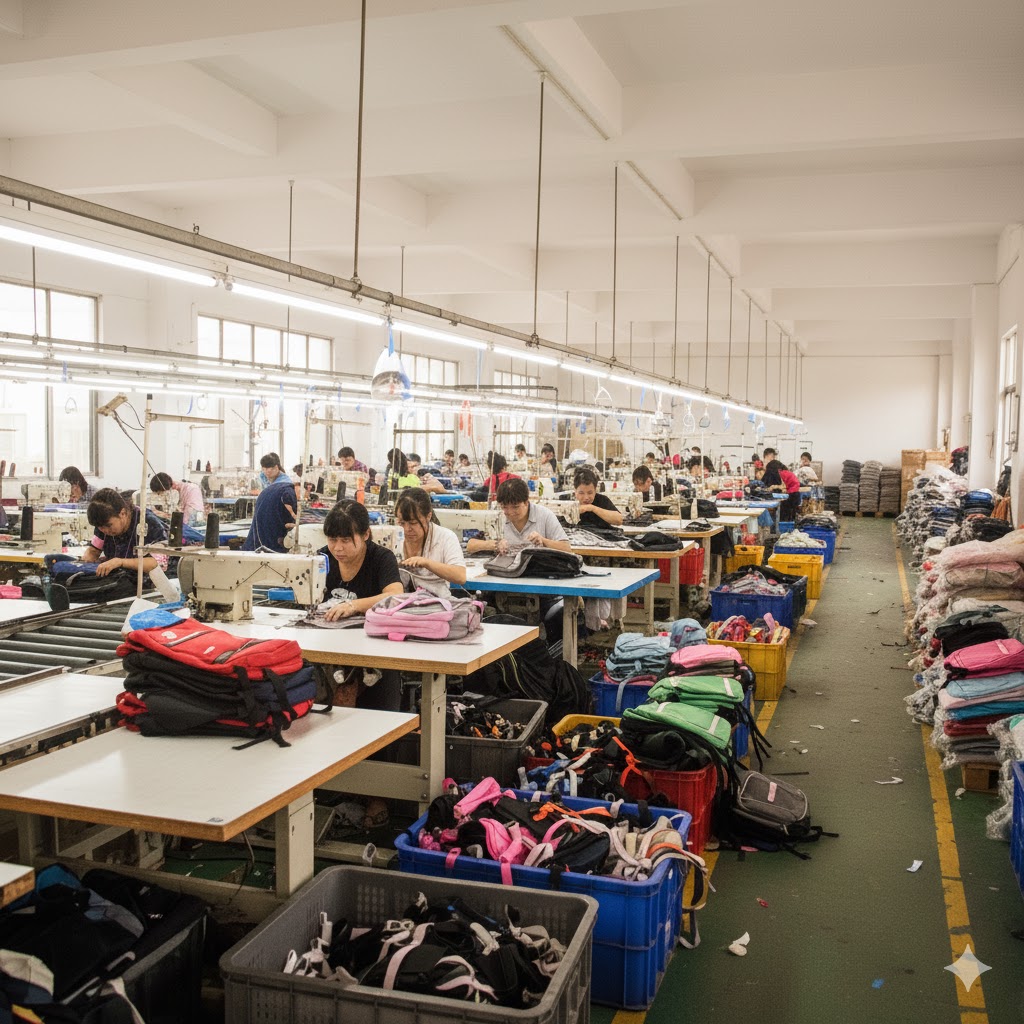
Choosing a backpack manufacturer is not a matter of finding a universally “best” factory. It is a comparison exercise: which supplier can show evidence that it understands, samples and controls the backpack you intend to buy?
This checklist is for brands, distributors and sourcing teams comparing wholesale or custom backpack suppliers. It does not rank companies, certify a factory or claim that a catalogue image proves production capability. Use it to keep your questions, evidence and unresolved points visible before you approve a sample or a purchase order.
Updated 10 September 2026 by YUEHU Buying Guides. This revision removes unverified claims about certifications, years in business, pricing, export coverage and manufacturing methods. Project-specific information should be confirmed in writing before it is relied on.
1. Start with the same brief for every supplier
A fair comparison starts with a consistent request. Give each supplier the same product intent: bag type, intended user, reference photos or sketch, estimated quantity, target market, branding method, preferred materials, packaging needs and timing constraints. If one supplier receives a detailed specification while another only receives a photo, their quotations cannot be compared as like for like.
For a first request, use a simple product brief rather than a long sales conversation. Our custom backpack RFQ template lists the fields that help a buyer distinguish a price estimate from a quote based on an agreed scope. Leave unknown items marked as open questions instead of allowing an assumption to quietly become part of the order.
2. Establish who will make the bag
Ask for the legal business name, the location proposed for production and an explanation of which steps are done by that business and which may be subcontracted. Decoration, printing, embroidery, special hardware or testing can involve other parties. That is not automatically a problem; it is important because it changes who is responsible for timing, approvals and evidence.
A factory photograph or a trading-company website is not enough to answer every question. During a mutually agreed call, visit or video review, ask the supplier to walk through the route proposed for your product: materials, cutting, sewing, branding, packing and any outsourced operation. Record what was shown and what still needs verification. Do not turn missing evidence into either proof of quality or an accusation.
3. Ask for comparable samples, not only attractive catalogue images
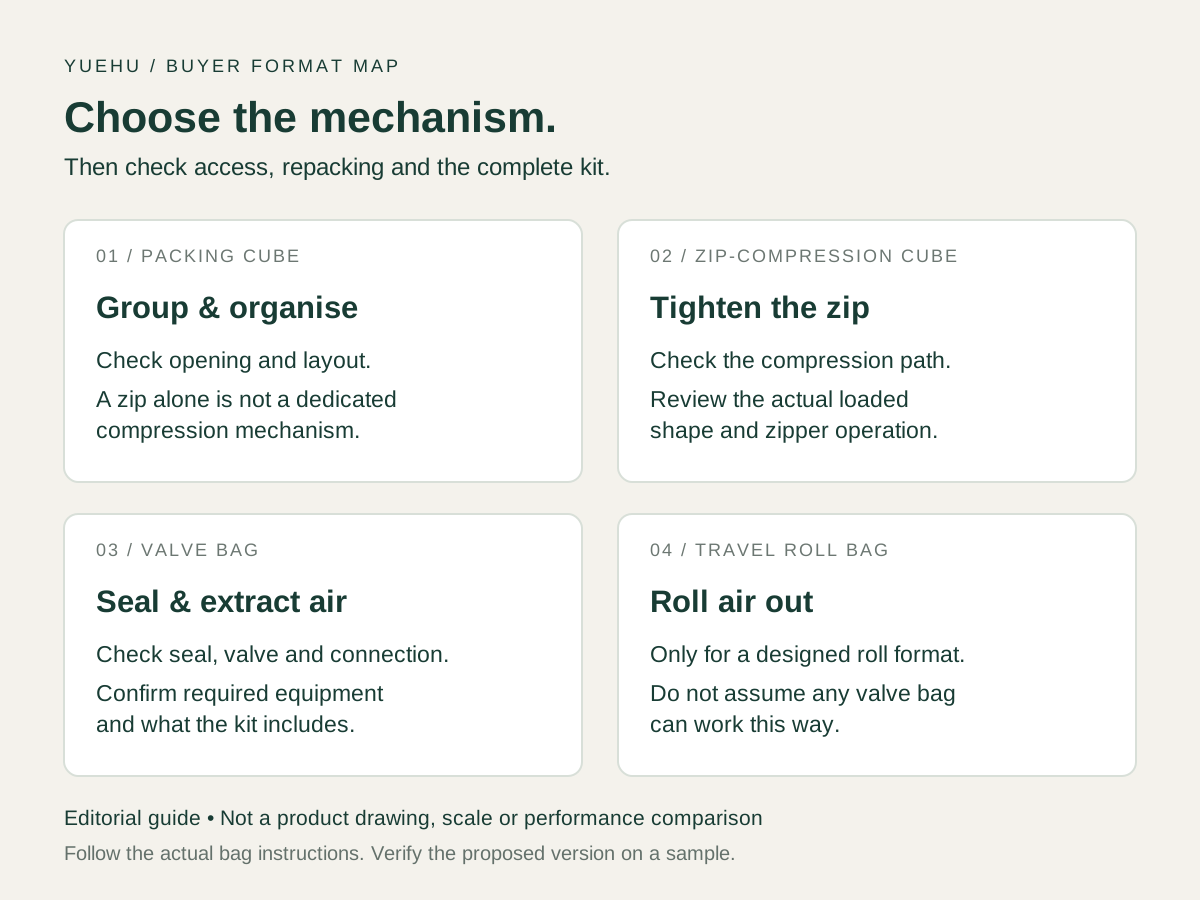
A laptop backpack, a foldable daypack and a vacuum packing bag have different construction and material questions. Ask to see samples close to the intended shape, openings, compartments, carrying arrangement and finishing. Look inside as well as outside: lining access, seam finishing, webbing attachment, reinforcement and hardware installation often reveal more than a front-facing product photograph.
For a packable style, sample review should also cover how the bag folds, stores and returns to its intended shape. The foldable backpack sample checklist can be used as a shared observation record. A good-looking sample is useful evidence, but it is not evidence that every future production unit will meet the same standard.
4. Turn descriptive words into a written specification
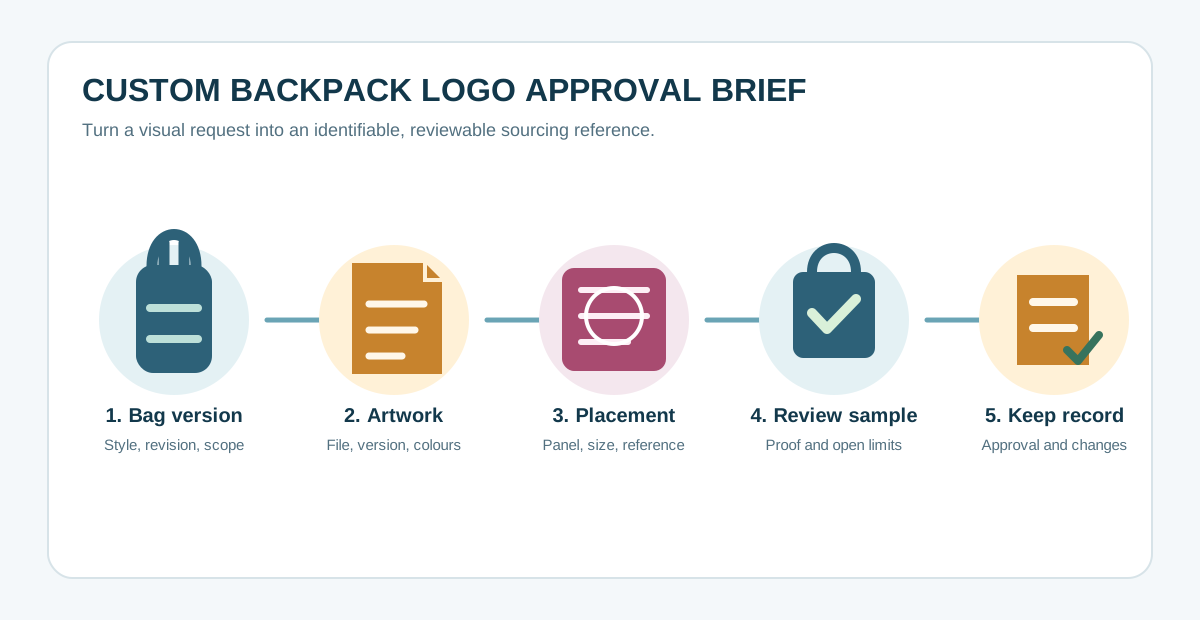
Words such as “premium”, “waterproof”, “heavy-duty” or “high quality” are too broad to compare suppliers. Request a written list of the intended outer fabric, lining, reinforcement, padding, webbing, buckles, zippers, logo method, labels and packaging. Note colour references and any proposed alternatives. A supplier should be able to identify what is agreed and what is still provisional.
For fabric, denier alone does not settle fibre, weave, weight, coating, backing or whole-bag performance. Our 210D, 420D and 600D fabric guide explains why buyers should ask for the complete material description. If a performance claim matters to your sale, agree the relevant test method, conditions, acceptance level and evidence before the order; do not infer a performance result from the material name alone.
5. Compare scope and risk, not only unit price
Put each quotation beside the same checklist. Confirm whether it includes sample work, development, artwork preparation, tooling, labels, packaging, inspection, freight terms, duties, payment terms and any minimum quantity. A lower unit price may describe a different material, a different logo treatment or a different packing method. Ask suppliers to call out exclusions rather than guessing them.
Commercial terms belong in the final agreement, not in a generic website article. The useful comparison question is: what must be approved, paid for or supplied before this supplier can make the product described? Record the answer with the quotation date and revision. This makes later changes easier to discuss fairly.
6. Agree how quality will be checked before production begins
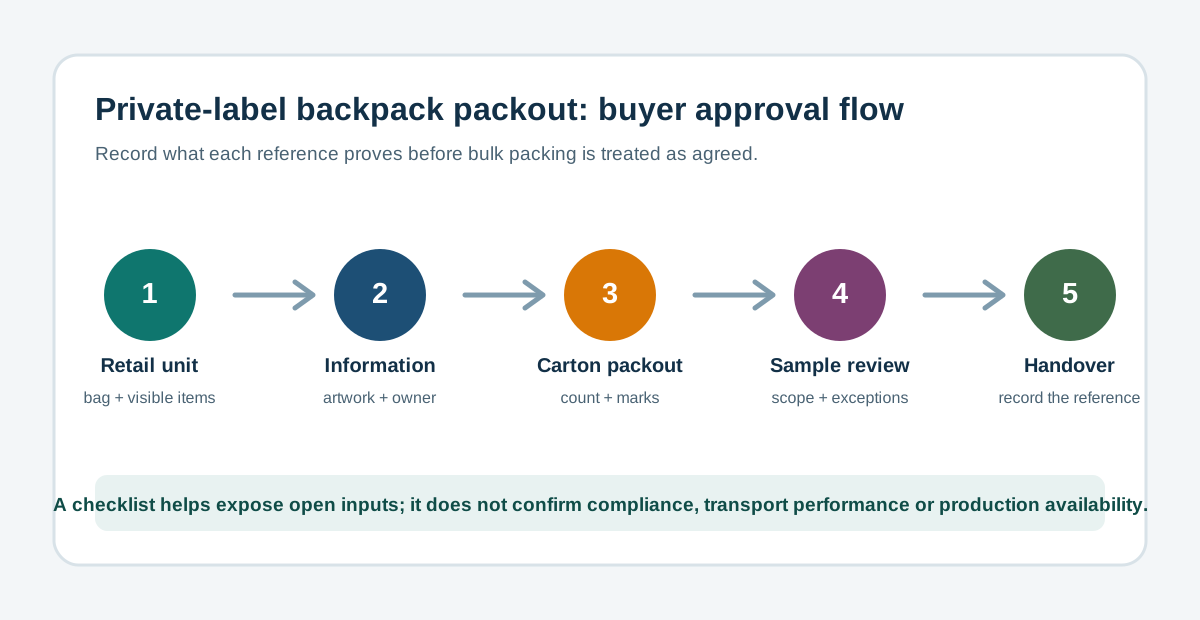
Ask what materials will be checked on arrival, what work stages are reviewed, who performs each check and what report the buyer receives. The plan should relate to your own specification. A final “pass” statement without a defined scope does not tell you which details were assessed.
If sampling inspection is proposed, clarify the lot, sample size, defect categories and decision rule. The American Society for Quality explains the role of sample sizes and decision criteria in sampling plans. AQL terminology by itself is not a full quality instruction and is not a guarantee that every item is defect-free. Agree the appropriate plan with the person responsible for quality in your project.
If a supplier presents a certificate, verify the named organisation, site, scope, issuer and validity through the relevant source. ISO explains how certification is issued and checked. A certificate should not be treated as proof of every product feature, supplier process or commercial promise. This article makes no claim that YUEHU holds a particular certificate.
7. Define how changes and problems are handled
Materials, hardware and colours can become unavailable. Before production, ask what happens when a proposed substitution is needed: who describes the change, who approves it, whether a revised sample is needed, and how cost or timing is affected. Keep one current product revision shared between buyer and supplier.
Also agree what happens when an inspection result is unacceptable: containment, correction, reinspection and release authority. A friendly working relationship helps, but it does not replace a documented decision. For large or high-risk orders, obtain suitable commercial, legal and quality advice for the relevant market.
Make a supplier comparison sheet
| Area | Evidence to record | Decision question |
|---|---|---|
| Product brief | Versioned request and assumptions | Did every supplier quote the same scope? |
| Comparable work | Sample photos, notes and open differences | Does it resemble the proposed bag? |
| Specification | Materials, components, branding and packing | What exactly is agreed? |
| Quality plan | Checks, owner, timing and report format | How will requirements be verified? |
| Changes | Approval route and revision record | Can substitutions occur without approval? |
| Commercial scope | Quote version, exclusions and terms | What is included and what remains open? |
Mark each item as verified, clarification needed or unresolved. The goal is not to force every supplier into the same score. It is to make the decision traceable to evidence relevant to your backpack project.
Discuss a backpack project with a clear brief
If you would like to discuss a YUEHU reference style, send the intended use, product sketch or reference, estimated quantity and the points you need to verify. We can discuss what information is available for that project without assuming that a catalogue image, generic promise or this guide settles the final specification.
Discuss a backpack sourcing project or browse backpack and bag references.
Leave a Comment