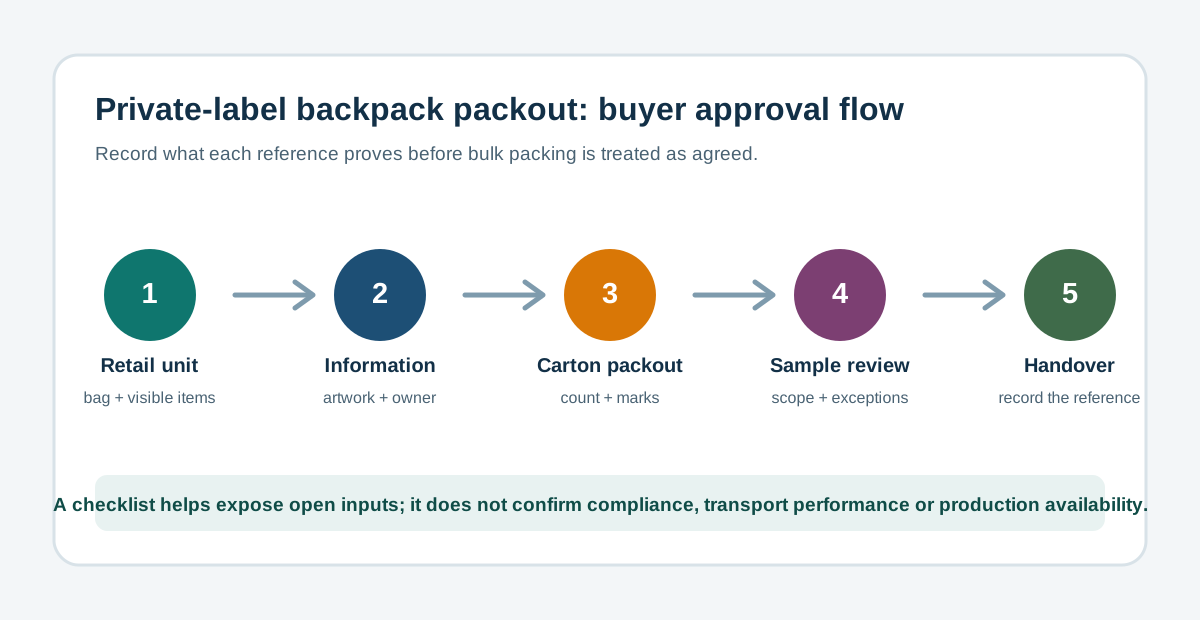
A backpack can be approved as a product and still arrive with avoidable packaging questions: which retail unit the barcode belongs to, whether a hangtag is in scope, how many units belong in a carton, and whose label or routing instruction controls the shipment. A packout brief turns those moving parts into a reviewable request before quotations or samples are compared.
Prepared by YUEHU Buying Guides as a buyer-side planning aid. It does not confirm that a particular YUEHU backpack, package, barcode, carton, shipment route or production option is available. Product, labelling, regulatory, packaging, quotation and shipping requirements must be confirmed for the individual project.
1. Separate the retail unit, the case and the shipment
“Custom packaging” is not one decision. A retail unit may include the backpack, a protective bag, hangtag, insert or retail box. A master carton may contain several retail units. A pallet or other logistic unit may contain several cartons and may be handled by a forwarder or receiver with additional requirements. Treating every layer as one unnamed “package” makes it difficult to compare quotes or identify what a sample represents.
Start from the selling and receiving context. A brand selling direct-to-consumer may need a different retail presentation than a distributor receiving bulk cartons, even when the backpack itself is unchanged. Record the bag style, colour or variant, target market, selling channel and estimated quantity. Mark missing information as open. A supplier can then say what it can evaluate and what it still needs instead of silently filling gaps with assumptions.
- Retail unit: the backpack and any customer-facing package or printed components.
- Inner pack: an optional grouping used for handling or replenishment.
- Master carton: the shipping case holding a stated count of the retail or inner units.
- Logistic unit: a pallet, cage or other transport/storage grouping that may carry carrier or receiver information.
This hierarchy is a planning model, not a claim that each project needs every layer. GS1 notes that packaging hierarchies may include units, packs, cases and pallets; if a buyer uses GS1 identifiers, each existing higher packaging level has its own identification rules. The right question for an enquiry is therefore not “what barcode should we use?” but “which organisation owns each identifier, and which physical unit must it identify?”
2. Write a packout request suppliers can price on the same basis
Ask for a proposed packout, but make the boundary visible. If a request says “export carton included,” it may not tell a supplier whether the price should include a printed retail box, a polybag, tissue, hangtag attachment, a carton label, pallet wrapping, a forwarder label or a pre-shipment inspection. List each visible or logistical item separately and state whether it is supplied by the buyer, proposed by the supplier, or still open.
| Brief item | What to state | Why it helps |
|---|---|---|
| Retail unit | Bag variant, presentation format, visible components and artwork version | Separates a product reference from the package being priced. |
| Packout count | Units per inner pack and per master carton; whether colour or size may be mixed | Makes carton assumptions comparable between quotations. |
| Protection | Requested fold method, protective materials or items that must remain uncreased | Lets a supplier flag construction or space constraints before a sample. |
| Carton marks | PO, SKU, carton sequence, ship-to fields and any buyer-supplied wording | Prevents operational labels from being confused with marketing artwork. |
| Handover | Who supplies routing, carrier, pallet or warehouse instructions, and when | Keeps final shipping instructions out of an early product assumption. |
For a public style reference, YUEHU’s expandable laptop backpack reference or business travel backpack reference can help identify a starting bag. The public pages do not by themselves confirm packaging dimensions, carton count, barcode use, price, MOQ, lead time or availability for a new order.
3. Identify units without guessing barcode, retail or transport requirements
A barcode graphic is not merely decoration. Its owner, encoded number, placement and the unit it represents must match the buyer’s commercial and supply-chain setup. GS1 describes GTINs as identifiers for trade items and explains that outer cases and logistics labels can use different label formats and data. It also says a serial shipping container code (SSCC) is the mandatory identifier only for a GS1 logistic label—not for every carton. That distinction is useful because a buyer should not ask a backpack supplier to invent GS1 identifiers or a logistics label without the right owner and receiving requirements.
In a packout brief, record the barcode/GTIN owner, supplied artwork or number, intended packaging level, and any retailer or warehouse rule. If these are not available yet, write “buyer to provide” rather than copying a barcode from an old sample. The same restraint applies to country-of-origin text, consumer warnings, marketplace labels and carrier routing marks: requirements can vary by destination, sales channel and product. Confirm them with the responsible buyer, importer, marketplace, carrier or adviser for the project; this article is not compliance advice.
Where a buyer changes the number of items in a case, the receiving side may need a new identifier or updated data. GS1’s pack/case guidance treats quantity changes as a case where the packaging hierarchy can require a new GTIN. That does not decide any one buyer’s implementation, but it is a reason to keep the “units per case” field next to the identifier field, not in an untracked email.
4. Approve the correct reference before bulk packaging is treated as agreed
A digital layout can prove spelling and broad placement. It cannot necessarily prove a fold method, physical clearance, bag fit, carton count, print finish or how the final packout looks after handling. Decide what reference answers which question: an artwork proof, a retail unit mock-up, a physical bag with its packaging, a carton sample, or a shipment-label layout. State the limitations of each one in the approval record.
- Check the source files: identify the bag revision, package artwork version, languages and components that are in scope.
- Review the sample requested: confirm what it shows and what it does not show, such as whether the carton count or carrier label was included.
- Record the approval: retain date, owner, photographs or files, and open exceptions.
- Control later changes: if the bag version, packaging component, packout quantity, mark or receiving instruction changes, identify the new revision and decide whether another proof is needed.
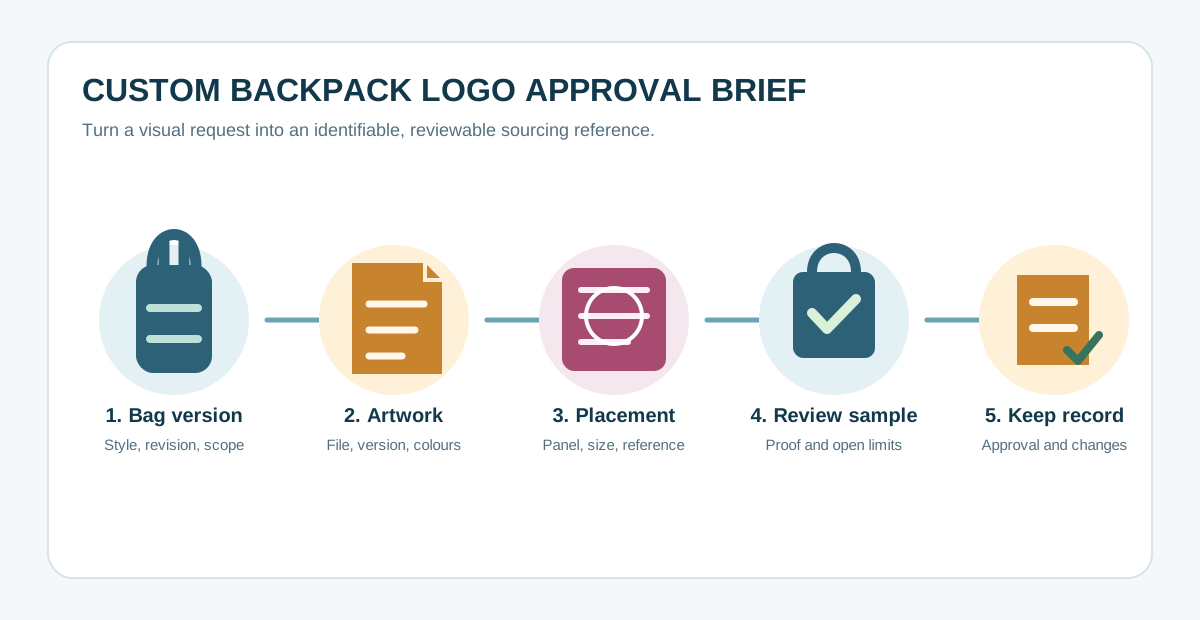
This aligns with the wider sourcing record. The backpack logo approval brief can document visual branding, while the backpack Tech Pack checklist covers broader product information. Use the custom backpack RFQ template to compare supplier quotations only after the packout boundaries are clear.
5. Download the private-label backpack packout brief
Download the private-label backpack packout brief (TXT). Attach it to an enquiry alongside the bag reference and artwork files. Leave unknown items open; a supplier’s confirmation is more useful when it responds to a visible question rather than an assumed requirement.
PROJECT / BAG REFERENCE: [ ]
TARGET MARKET + CHANNEL: [ ]
RETAIL UNIT COMPONENTS: [ ]
ARTWORK / LANGUAGE FILE VERSION: [ ]
BARCODE OR GTIN OWNER + PACKAGING LEVEL: [ ]
UNITS PER INNER PACK / MASTER CARTON: [ ]
CARTON MARK FIELDS + OWNER: [ ]
SAMPLE OR PROOF REQUIRED: [ ]
APPROVAL OWNER + DATE: [ ]
OPEN QUESTIONS / EXCEPTIONS: [ ]
Questions buyers often ask
Can a supplier choose the carton quantity for me?
A supplier can propose a configuration, but it should be recorded as a proposal and checked against the buyer’s receiving, storage, sales-channel and freight needs. The buyer should not assume that a proposed carton quantity also settles barcode, retailer, compliance or pallet requirements.
Does a master-carton label replace retail packaging artwork?
No. A carton mark supports handling and receiving; retail artwork addresses a different unit and audience. Both may be in scope, but they should be listed and approved separately.
Does a physical packaging sample guarantee shipping performance?
No. It records the reference that was reviewed. Transport method, handling, testing, inspection, carrier requirements and commercial responsibility must be agreed separately.
Bring the packaging questions into the sourcing conversation
Send the bag reference, target market, estimated quantity, intended retail unit, known packout count and any buyer-supplied label or artwork files. YUEHU’s enquiry form can start a B2B sourcing discussion. Final product, packaging, labelling, samples, quotation, minimum quantity, production, transport and quality requirements must be confirmed for each enquiry.
General identification references: GS1 Global Data Model Attribute Implementation Guide; GS1 Logistic Label Guideline; and GS1 GTIN Management: Pack/case quantity. They provide general standards guidance, not project-specific packaging or compliance confirmation.
Leave a Comment