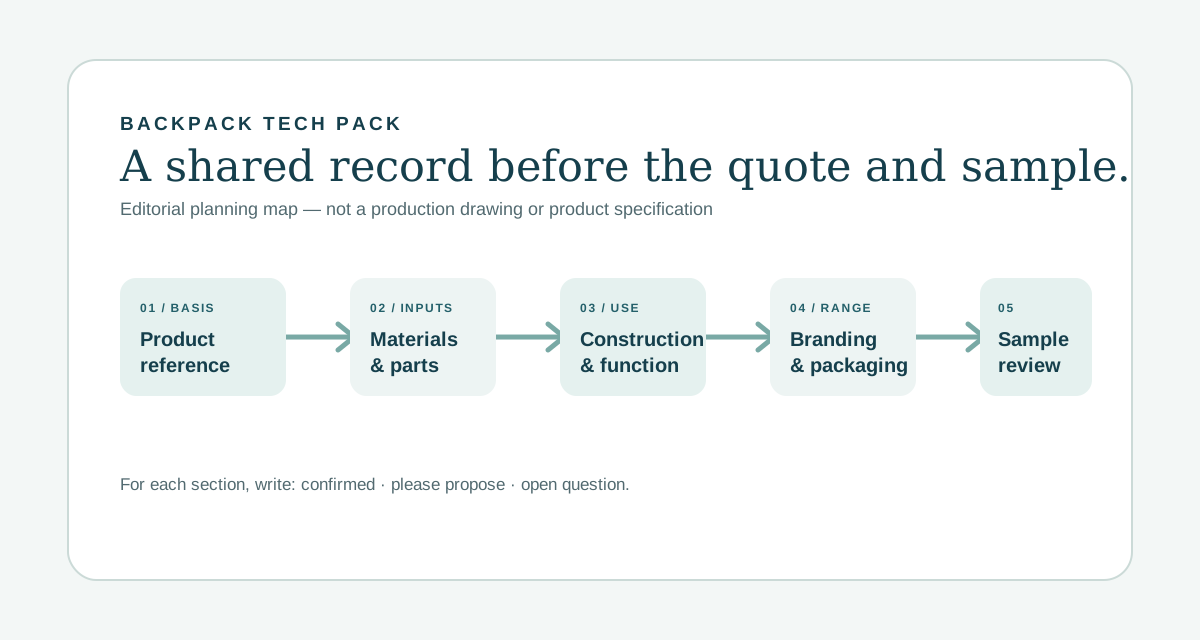
A backpack tech pack is a working specification for a product team and a supplier. It turns a reference bag, sketch or early idea into a shared record of what is decided, what still needs a choice and what the sample must prove. For a brand or wholesale buyer, the value is not making the document look technical. It is preventing a quote, sample or production discussion from quietly moving onto a different version of the bag.
This checklist is for an OEM, private-label or custom backpack enquiry. It does not certify a product, replace a factory pattern, confirm a material's performance or set a universal minimum quantity or lead time. Use it to prepare questions and compare what suppliers propose for your specific project.
Start here: define the quoted version · build the tech-pack sections · control sample approval
1. Decide what version is being quoted
Begin with one named version. A supplier cannot reliably price “the same as the image, but better quality” because the image does not establish the fabric, component, construction or branding scope. Give the brief a version ID such as City Daypack / V0.2 / 17 Sep. Put that ID in the email subject, file name and quotation request.
- Reference basis: link to a catalogue style, attach annotated photographs or include a sketch. State whether the reference is for shape only, construction only or a fuller starting point.
- Intended user and channel: explain who carries the bag, the typical contents and whether it is for retail, distribution, corporate use or another programme.
- Must keep / may change: separate non-negotiable features from items where the supplier may propose an option. This makes an alternative visible instead of letting it replace the requested version.
- Destination and retailer requirements: add the market, packaging rules or buyer requirements you already know. Do not infer compliance from a general product photo or an earlier order.
A tech pack and an RFQ solve different problems. The tech pack describes the product version. The RFQ asks for commercial terms for that version. Once the version is stable enough to compare, use our custom backpack RFQ template to ask every supplier the same commercial questions.
2. Build five sections that a supplier can answer
A first brief can be short. What matters is that each section says either “confirmed”, “please propose” or “open question”. Leaving a blank field can be mistaken for permission to decide on your behalf.
Product views and dimensions
Use front, back, side and inside views when they help. Label the main opening, exterior pockets, laptop area, bottle pocket, straps, carry handle and removable parts. Give finished dimensions when known and state which measurement is critical. For laptop carry, provide the actual device and case dimensions rather than only the screen size.
Do not turn an approximate image measurement into a production tolerance. Mark it as an estimate and ask what information is needed before a final pattern can be confirmed.
Materials and components
Record each visible material or ask for options in a simple matrix: outer fabric, lining, foam or reinforcement, webbing, zipper, puller, buckle, hook, label and thread. A denier number alone does not identify fibre, weave, weight, coating or finished performance. Our backpack fabric guide explains the questions worth separating before you compare material options.
For each item, state whether you have a code, colour reference, swatch or only a desired use. If you need a performance, safety or certification claim, put the exact requirement and evidence needed into the brief. Do not write “waterproof”, “durable” or “certified” as a substitute for a defined requirement and supporting proof.
Construction and user function
Describe how the bag must work, not only how it should look. For example: opening direction, compartment access, strap adjustment range, whether a pocket must fit a named item, or how a foldable bag is meant to pack away. Identify places where you need a supplier's feasibility input rather than presenting a concept as a resolved construction detail.
When a bag folds or converts, evaluate both states. The buyer should see the packed form, carrying form, re-packing sequence and any parts that can catch, twist or become difficult to access. Use the foldable backpack sample checklist when that use case applies.
Branding, labels and packaging
Show logo artwork, preferred placement and the size or position you want reviewed. Keep a source file or clearly named artwork version with the brief. List labels, hangtags, individual bags, inserts, carton marks or barcode requirements separately from the bag itself. These items affect the scope of a quotation and the sample you need to approve.
Ask the supplier to label any proposed substitution or missing detail in its reply. A logo method, label material or packaging option may be commercially useful, but it should be presented as an option—not silently treated as included.
Quantities and change control
Give an honest quantity scenario by style, colour and branded version. If the quantity is not final, say so and ask for clearly labelled scenarios. Do not assume that the total across multiple colours or styles meets the minimum for each material, component or custom treatment.
Keep a compact change log: version, date, what changed, who requested it and whether the quote or sample must be updated. This helps a buyer avoid approving an old sample after the brief has changed.
3. Copy this buyer tech-pack checklist
Paste this into a project document before you request a quotation. Mark unknowns as “please propose” rather than inventing a specification. The list is an editorial planning aid, not a manufacturing instruction.
Backpack project: [name] / Version: [date and number]
- Reference images, links or sketch: [ ]
- Target user, intended contents and sales channel: [ ]
- Finished dimensions / critical fit points: [confirmed / estimate / please propose]
- Outer, lining, webbing, reinforcement and hardware: [codes, swatches or options requested]
- Construction and function requirements: [ ]
- Logo artwork, position, labels and packaging: [ ]
- Destination market / retailer requirements already known: [ ]
- Quantity scenarios by style, colour and version: [ ]
- Sample purpose and approval points: [ ]
- Open questions and acceptable alternatives: [ ]
Please identify any assumption, unavailable component or proposed substitution separately. Confirm which version the quotation and any sample represent.
4. Make the sample an approval record
A reference sample can show an overall shape. It cannot approve a custom logo, colour, material, packaging or construction detail that is not present. Before a sample is made, write what it is intended to prove and what remains provisional. Give the sample the same version ID as the brief or an explicit new revision ID.
Review the sample against the tech pack section by section. Record pass, change requested, not represented or still open. If a change affects materials, construction, branding or quantity, ask whether the quotation and next sample need to change as well. This is a practical application of a quality-plan approach: customer requirements, responsibilities, checks and acceptance criteria should be visible rather than assumed. See ASQ's overview of quality plans for the general principle; it does not verify any particular supplier or backpack.
| Section | Record | Sample review question |
|---|---|---|
| Version | Brief ID, drawing date and reference images | Does this sample match the requested revision? |
| Materials | Codes, swatches, options and open points | Which material is actually represented, and what is still proposed? |
| Construction | Openings, pockets, straps, reinforcements and access | Does the use sequence reveal a problem not visible in a flat image? |
| Brand / pack | Artwork version, labels and packing components | Are placement, spelling and included items represented? |
| Commercial scope | Quantity scenario, quoted inclusions and exclusions | Does a requested change require a revised quotation or timeline discussion? |
Common questions
Do I need a complete tech pack before contacting an OEM backpack supplier?
No. A clear reference, intended use, target quantity and a list of open questions are enough to begin a discussion. Treat early replies as provisional where material, dimensions, branding or construction are not yet decided.
Can a supplier create the technical drawing for me?
Ask what development support is available for your project, what inputs are required and which decisions need approval. Keep the resulting drawing or specification versioned so it can be compared with the quotation and sample. Do not assume development, ownership, testing or tooling terms without confirming them in writing.
How do I start a YUEHU backpack project brief?
Choose a catalogue reference or share your own concept, then send a project brief to YUEHU. Include the version, target market, quantity estimate and the decisions you want to review. Product feasibility, samples, specifications and commercial terms are confirmed for each project.
Leave a Comment