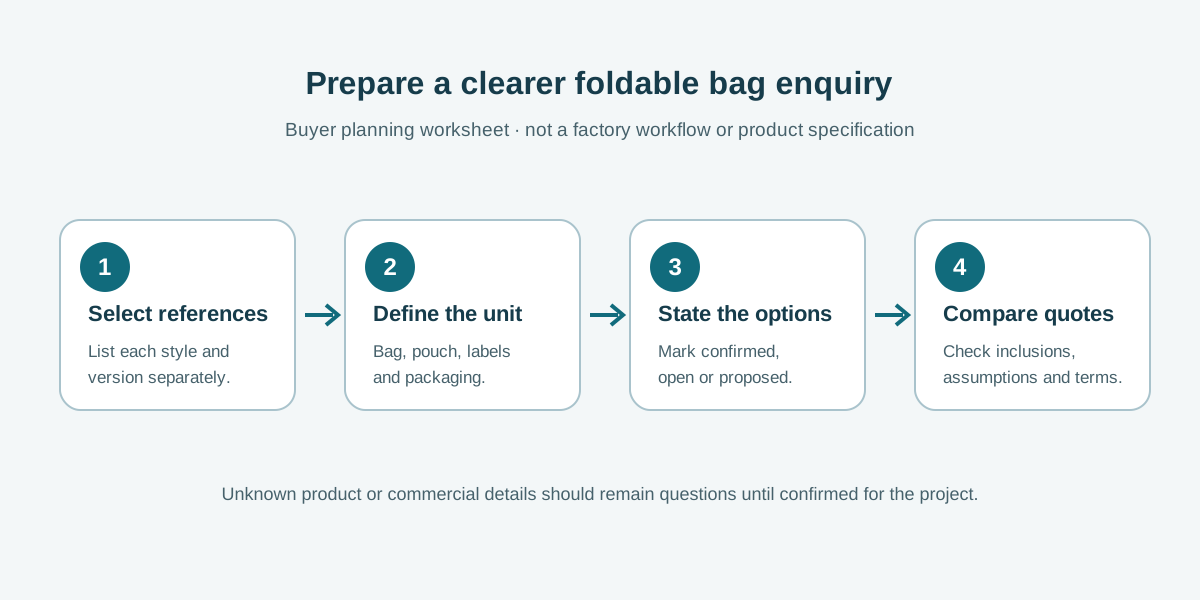
A wholesale enquiry for foldable bags is easier to compare when every supplier is quoting the same styles, selling units and packaging assumptions. This buyer-side brief helps brands, distributors and sourcing teams organise those decisions before they request a quote.
Use it for an existing catalogue reference or a new private-label idea. It does not confirm that a style is in stock, that different styles share one minimum quantity, or that a supplier offers a particular material, sample service or production term. Mark unknowns as questions for the supplier.
Prepared by YUEHU Buying Guides as a practical sourcing worksheet. The questions are buyer prompts, not a description of a verified YUEHU production process.
Start with an order brief, not a premature specification
A wholesale order brief answers a commercial planning question: which bag styles and versions are you considering, how might they be grouped, and what should a supplier clarify before quoting? A tech pack records the product details for a particular version. An RFQ asks suppliers for comparable commercial terms. These documents can work together, but they are not interchangeable.
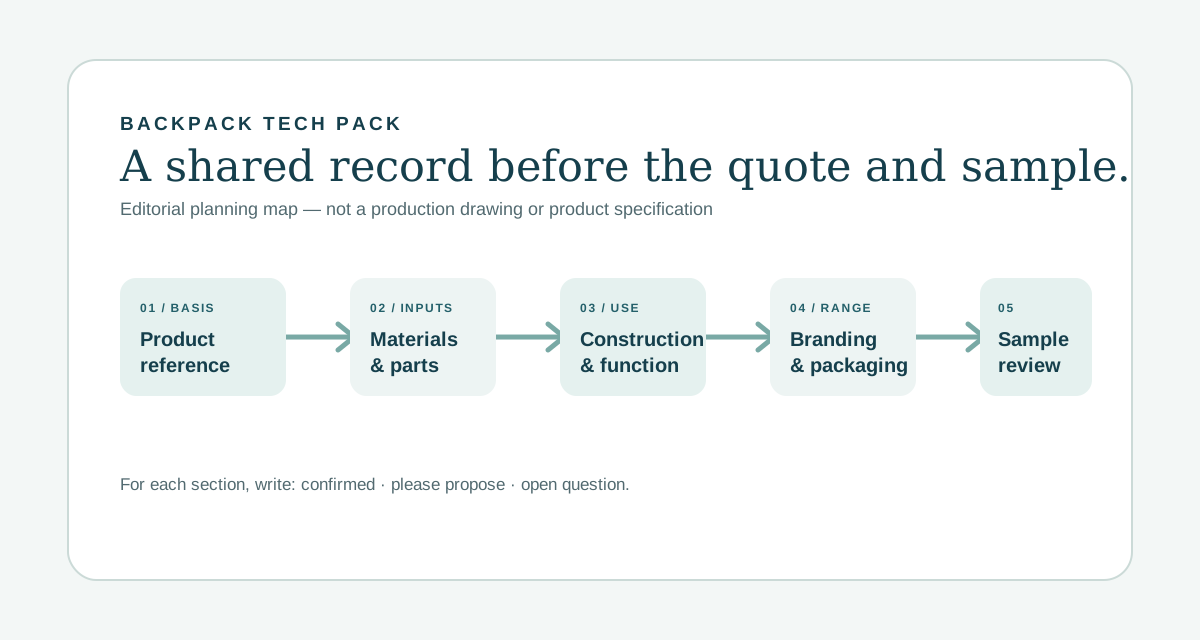
If you are still choosing between styles, begin with catalogue references and an assortment plan. When one version is selected for development, record its dimensions, materials, construction, branding and approval points in a separate specification. This keeps early ideas from being mistaken for confirmed production instructions.
1. Name every style and version in the assortment
Give each candidate a row of its own. Include the product link, the version or reference shown, the use you intend to evaluate, and the features that matter to your programme. Do not write only “foldable bag range”: a foldable travel backpack, tote and duffel can represent different product shapes and buyer requirements.
YUEHU's public catalogue includes examples such as a foldable travel backpack (W12), a foldable travel tote (W13), and styles described by their front pouch (W14), detachable pouch (W15) or front pocket (W16). Treat these pages as references to discuss—not proof of current availability, exact specification or order terms.
Separate “must keep” from “open to proposal”. For example, a buyer may want to keep the general silhouette but ask the supplier to propose a suitable fabric or folding arrangement. Label each choice as confirmed, estimate, please propose or open question. This makes assumptions visible in the supplier's reply.
2. Define what one sellable unit includes
Before asking for a quote, describe the intended selling unit. Is the bag presented on its own, folded into an attached pocket, packed with a separate pouch, or combined with another item? If you are unsure, state that the supplier should clarify the options and quote them separately where practical.
List every component that could affect the customer's expectation: the bag, detachable parts, labels, hangtags, inserts, protective packaging and any other item shown in the product presentation. A photograph does not by itself tell a buyer which components are included. Ask the supplier to identify inclusions, exclusions and proposed substitutions in writing.
Also say whether your customer will receive the bag folded, unfolded or in another agreed presentation. If the bag's storage method matters, describe the intended sequence in plain language and ask which details need to be confirmed on a sample. Avoid promising a packed size or method based on an unverified image.
3. Make quantity scenarios clear by style and colour
Prepare a simple assortment table with one row per style and colour. Add your estimated units for each combination, even if the numbers are provisional. If you only know the likely overall range, write that as a planning estimate and ask the supplier what additional breakdown is needed.
Do not assume that quantities across colours or different styles can be combined for a minimum order, material purchase or custom treatment. Ask the supplier to state any applicable minimums for each quoted version and to show any alternative quantity scenarios. The aim is not to force a commitment before you are ready; it is to expose the assumptions that would otherwise make two quotations difficult to compare.
For a launch with several bag styles, identify which items are confirmed priorities and which are optional. This can help a supplier separate a core proposal from add-ons instead of blending all items into one unclear total.
4. Separate bag customisation from packaging requirements
Describe the branding you are considering: logo position, artwork status, preferred method if known, label requirements and colour references. If you do not yet have production artwork, say so. Ask which file format or sample approval is required before a logo can be quoted or applied.
List packaging separately from the bag. Buyers may need to confirm an individual bag, insert, hangtag, barcode label, carton mark or retail presentation, but these items should not be assumed from a product photo. If your retailer or destination market has a written packaging guide, attach the relevant requirement or name the document and revision. Ask the supplier to flag anything not included in its quotation.
Keep requested custom work distinct from a supplier's suggested alternative. A proposed logo method, colour substitution or packaging option can be useful, but it should remain an option until you review and approve it.
5. Decide what you need to learn from a sample
A sample is most useful when the buyer first writes down the questions it should answer. For a foldable style, these might include how it opens, how the carrying form feels in the intended use, how it folds back, whether the closure and storage arrangement are understandable, and whether the logo and packaging look as intended. Choose checks that matter to your product; do not treat this list as a universal test standard.
Record which details the sample represents and which remain provisional. If you change a material, dimension, pouch, logo or packaging after review, ask whether the quotation or next sample needs revision. The foldable backpack sample checklist provides a separate evaluation worksheet for the sample stage.
6. Ask suppliers to state quote assumptions
Request the same information for each style and quantity scenario: quoted version, currency, unit basis, inclusions, exclusions, branding and packaging scope, sample arrangement, quote validity and delivery terms. If a supplier cannot yet confirm an item, ask it to label the item as pending rather than silently treating it as included.
Compare like with like. A lower unit figure may represent a different product version, packaging scope, order quantity or delivery basis. Keep unanswered questions beside the price rather than filling gaps with your own assumptions. Confirm payment, production, sample and shipping arrangements directly with the supplier before making a commitment; this article does not set those terms.
To organise the commercial questions consistently, adapt the downloadable YUEHU backpack RFQ template. It is a starting worksheet, not a quotation or a statement of standard terms.
Copyable foldable bag order brief
Use this short template in an email or project document. It is also available as a downloadable foldable bag order brief (TXT).
Project / buyer: [ ]
Destination market and channel: [ ]
Product links or references by style: [ ]
For each style and colour: [estimated quantity / confirmed or provisional]
One selling unit includes: [bag / pouch / labels / packaging / please clarify]
Must keep: [ ]
Supplier may propose: [ ]
Branding and artwork status: [ ]
Packaging or retailer requirements: [attach document and revision, if available]
Sample questions: [ ]
Please state in your quotation: [version, currency, quantity basis, inclusions, exclusions, sample arrangement, validity and delivery terms]
Open questions: [ ]
Common questions
Should I combine several foldable bag styles into one enquiry?
You can introduce the range in one enquiry, but list each style separately with its own quantity and customisation assumptions. Ask the supplier to identify whether any commercial terms differ by style, colour or component.
Do I need final quantities before asking for a quotation?
You can share provisional scenarios. Label them clearly and ask which details are needed for an indicative comparison and which must be confirmed for a final offer. Do not treat an estimate as a purchase commitment.
What if I only have a reference image?
Send the link or image and explain what it represents: overall appearance, a feature to keep, or a starting point only. List what is unknown and ask what measurements, artwork or sample decisions the supplier needs next.
How do I start a YUEHU foldable bag enquiry?
Choose one or more catalogue references, add your target use and quantity scenario, and send the sourcing brief to YUEHU. Specifications, availability, samples and commercial terms need project-specific confirmation.
How to use this guide
This worksheet is designed to make a first supplier conversation more specific and quotations easier to compare. It is not a factory audit, a product test, a certification, or proof that any particular order can be fulfilled. Confirm product and business details directly for your project. If a requirement is unknown, write it down as a question instead of turning it into a claim.
Leave a Comment