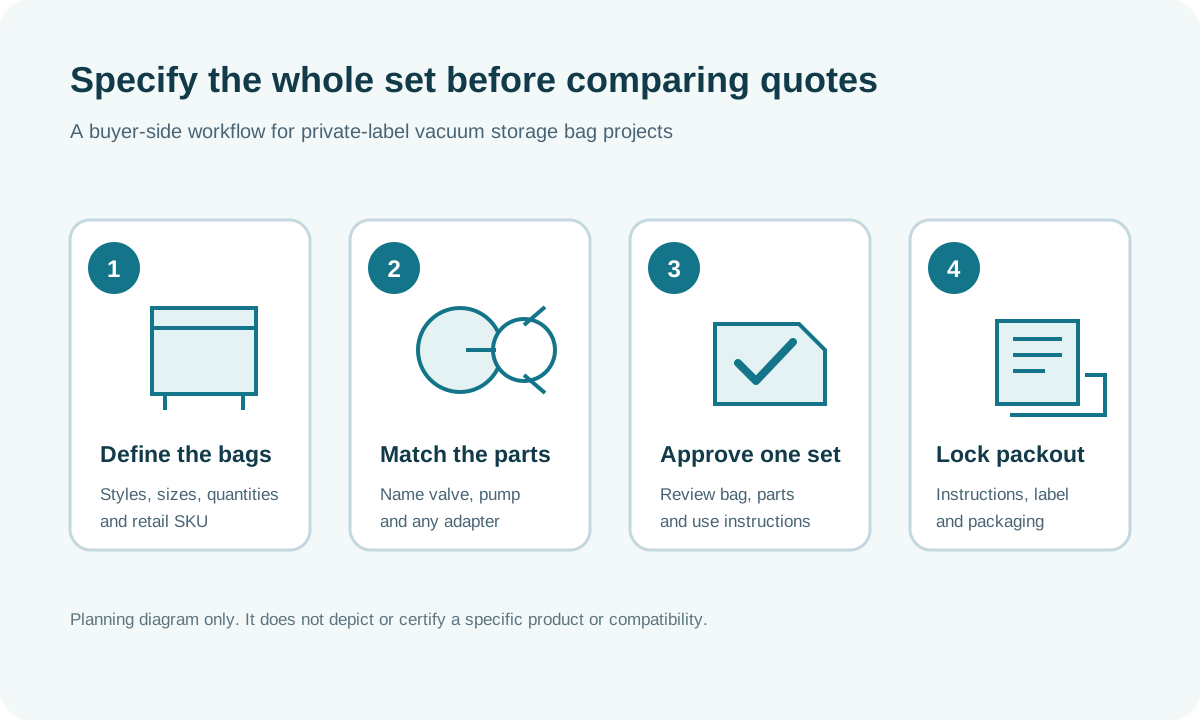
Prepared by YUEHU Buying Guides as a buyer-side sourcing checklist. It describes questions to confirm with a supplier; it does not state that a particular pump, adapter, material or retail set is part of YUEHU’s range.
A quote for “vacuum storage bags with a pump” can describe very different kits. One offer may cover bags only; another may include a hand pump, a powered pump, an adapter, instructions and retail packaging. If the included parts or their fit are unclear, the buyer may compare unlike products or approve a sample that is not the set later packed for sale.
Define the bag, air-removal method and sellable pack together. This checklist helps importers, retailers and private-label teams request comparable proposals while keeping unconfirmed specifications open.
1. Describe the sellable set, not just the bag
Start with the sales unit you want a customer to receive. Give every proposed pack a working SKU or version, then record each item and quantity. A simple matrix prevents a supplier from assuming that “one set” means the same thing you do.
| Set component | Buyer should specify |
|---|---|
| Bags | Style or reference, finished dimensions, quantity per size, and whether sizes are mixed in one retail unit |
| Air valve | Valve location and the exact approved interface or component reference, where available |
| Pump | Hand-operated or powered; whether included; quantity per set; exact model or sample reference |
| Adapter or hose | Whether required, included, and approved for the named valve and pump combination |
| Retail packout | Instruction leaflet, labels, barcode/artwork, inner pack and specified quantities |
Mark each line as “included,” “optional,” “not included,” or “to be confirmed.” Keep the outer shipping carton separate from the consumer-facing pack so quotations do not mix them up.
2. Treat compatibility as a specific combination
Do not assume that a pump fits because both items are described as “vacuum.” Compatibility may depend on the valve shape, opening, seal surface, pump nozzle and any adapter. Ask the supplier to identify the exact bag, valve, pump and adapter version being offered, then confirm that combination with a sample or written component reference.
Product documentation from other brands illustrates why model-level checking matters. LAICA lists specific bag and sealer models and identifies an adapter used with certain machines; FoodSaver explains that some zipper bags require a designated adapter and hose. These are examples of those brands’ systems only. They do not establish compatibility with YUEHU products or with another supplier’s components. See the LAICA VT3522 specifications and FoodSaver zipper-bag compatibility FAQ.
If the set uses a powered pump, list the exact model, power source and included charging or cable parts. For a target market, have the responsible supplier confirm which product documents, labels and shipping information apply to that exact device and configuration. Do not infer compliance or freight eligibility from another model.
3. Approve the complete set in use
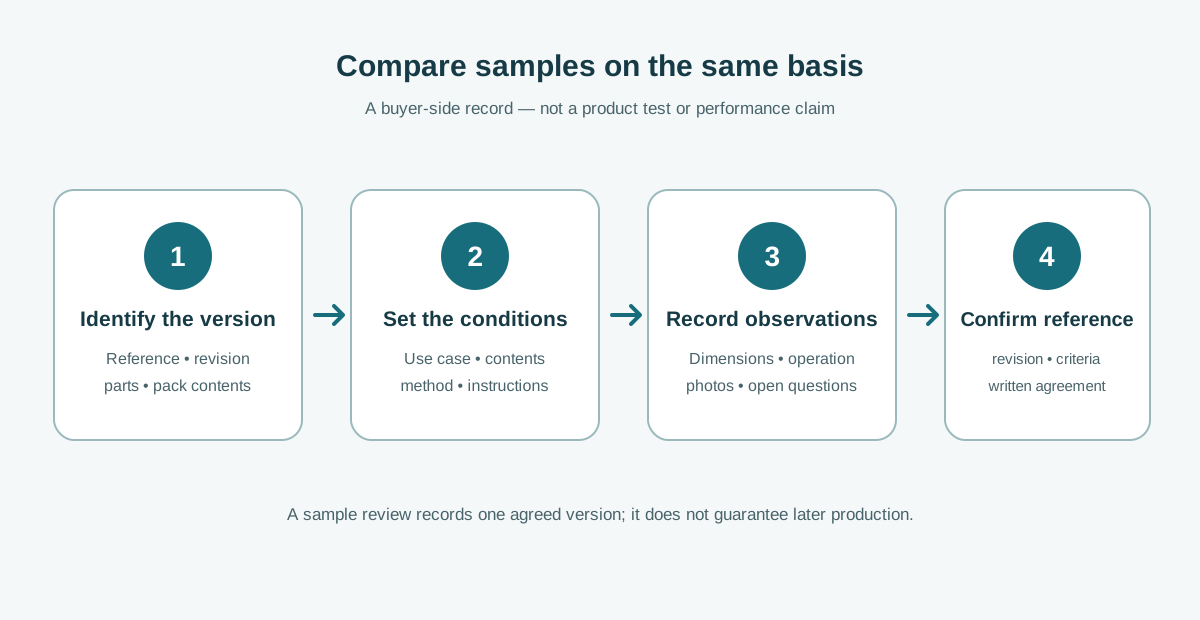
Review a sample containing the same bag, valve, pump, adapter and instructions intended for the quoted version. Ask the supplier to demonstrate the normal connection and removal sequence using the supplied parts. Check that the parts can be connected as intended, that any required cap or adapter is present, and that the instruction sheet matches the sample.
Record what you observed and under which conditions. A sample review is not a performance certification: do not turn one demonstration into a guaranteed compression, retention or durability claim. If a performance threshold matters to the sale, agree the test method, conditions, acceptance criteria and evidence separately before putting it on packaging or advertising.
Keep the approved sample ID, dated photos, instruction revision and written open questions with the same version of the quote. When a pump, valve, bag size or packout changes, review whether the approval still applies.
4. Make each quotation comparable
Send the same set matrix to every supplier. Ask each to identify what is included in the quoted unit price and list optional items separately. Tie any MOQ, sample charge, production timing, packaging cost or commercial term to the exact SKU mix and version; those terms need supplier confirmation for the individual project.
- Do all quotes include the same number and sizes of bags?
- Is the pump included, and is it the same type and quantity?
- Are adapters, instructions, labels and retail packaging included or priced separately?
- Does the quotation identify the approved sample or component references?
- Which details remain unconfirmed, and who must confirm them before production?
A lower unit price may reflect a different pump, bag mix or packout. Compare equal configurations first; assess price after the scope is aligned.
Copyable set brief for a supplier
Use this short outline to begin a sourcing conversation. Download the vacuum storage bag set buyer brief (TXT) and fill in what is known; leave other items marked for supplier confirmation.
Product: Vacuum storage bag set, version/SKU: [ ]
Bag references and finished sizes: [ ]
Quantity by size in each retail set: [ ]
Valve/interface reference: [supplier to identify/confirm]
Pump: [none / hand / powered / other], model and quantity: [ ]
Adapter or hose: [required / not required / to confirm]; included quantity: [ ]
Retail packout: [instruction language/revision, label, artwork, barcode, packaging]
Sample approval: Please identify the complete sample configuration and show its use sequence.
Open items: Please mark unconfirmed specifications and quote assumptions.
Common buyer questions
Can a household vacuum cleaner replace the pump?
Only if the specific bag, valve and equipment instructions confirm that use. Some sets are designed around a particular pump or adapter. Do not assume a general-purpose hose will fit.
Should the pump be included in every retail pack?
That depends on the product design and sales channel. Compare bag-only and complete-set versions as separate SKUs, and explain clearly what each package contains.
What should be checked before mass production?
Confirm that the approved bag, valve, pump, adapter, instructions and packout still match the purchase specification. If any part or artwork changed after approval, record the revision and obtain the required approval again.
Use the brief to request a project-specific review
For a vacuum storage bag project, share the target bag sizes, intended use, pump preference, market and packaging plan. YUEHU’s vacuum storage bag project page provides product references for discussion; final specifications, included accessories and commercial terms must be confirmed for each project. You can also use our sample comparison checklist to record what is actually present in each supplier sample, or send an enquiry.
Sources and boundaries
The brand-specific compatibility examples above are drawn from LAICA’s VT3522 product specifications and FoodSaver’s vacuum zipper-bag FAQ. They demonstrate why the named parts and supported equipment should be checked for a particular system. They do not describe YUEHU’s manufacturing process, product contents, performance, compliance or compatibility. No MOQ, price, lead time, certification or measured result is claimed here.
Leave a Comment